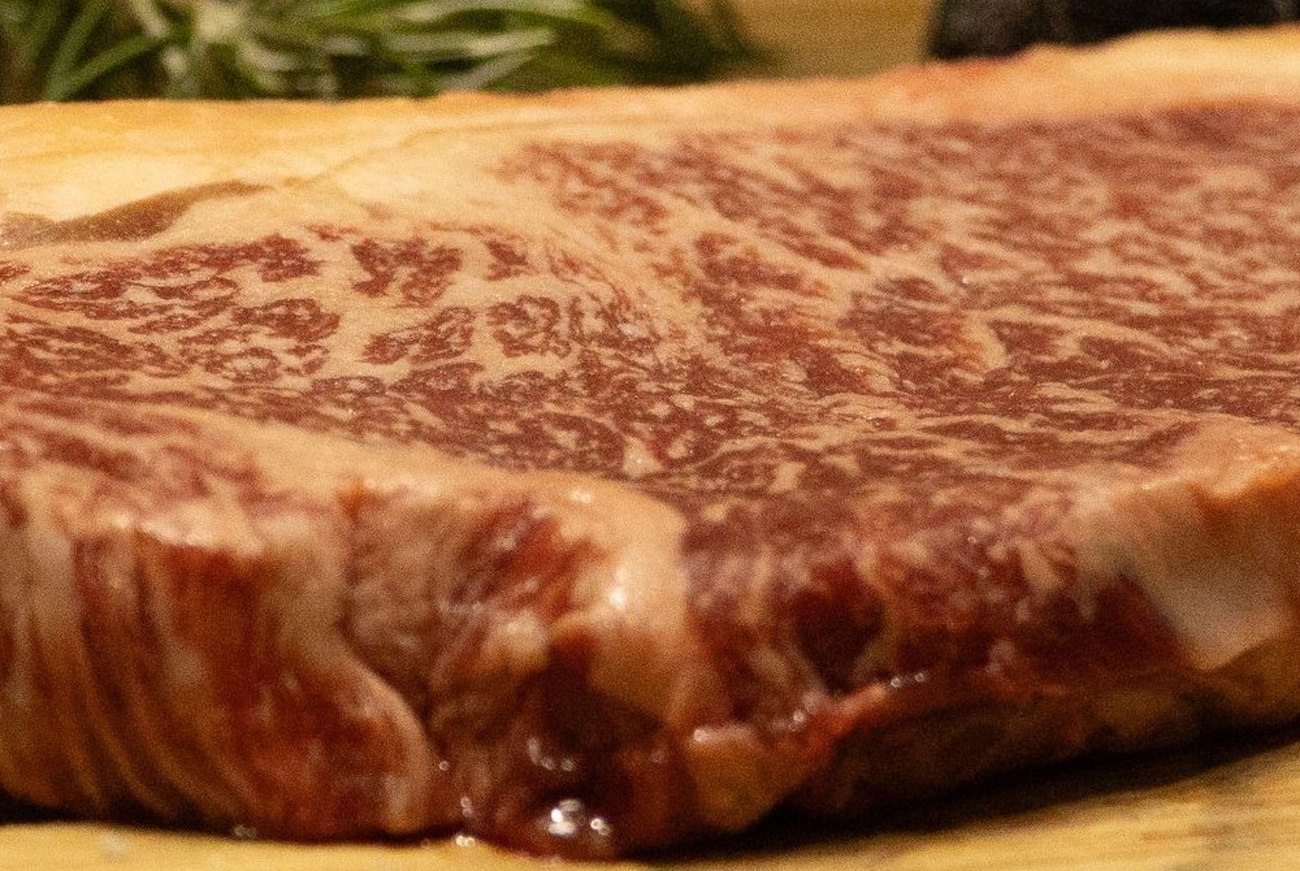
What makes it wagyu.
Marbling is the thing wagyu is known for. Here is what it actually is, how it is measured, and why it changes the way the beef eats.
What marbling actually is.
Marbling is fat held inside the muscle itself — intramuscular fat — not the seam of fat around the outside of a steak. On a well-marbled cut it reads as fine white threading through the red, closer to lace than to stripes.
That fat does three things as the steak cooks. It melts and bastes the muscle from the inside, which is why a marbled cut stays moist at a temperature that would dry a lean one. It breaks up the muscle fibres, so the meat gives more easily under a knife. And it carries flavour, because much of what we taste in beef is fat-soluble.
Wagyu fat is also softer than the fat on most breeds and begins to melt at a lower temperature — low enough that a thin slice can feel as though it is going soft against the roof of your mouth. That is the sensation people mean when they say wagyu melts.
Marbling is not the whole story. How the animal was handled, how long the beef was hung, the particular cut and how carefully it is cooked all matter — a beautifully marbled steak can still be ruined in the pan. A marble score is one useful number, not a verdict.
Reading the marble score.
Marbling is scored by eye against a reference standard, on the chilled cut face at a set rib position. New Zealand and Australian beef is usually described on the AUS-MEAT marble score, which runs 0–9. Japan uses its own BMS scale, which runs 1–12. The two are not interchangeable: a Japanese A5 sits well above the top of the Australasian scale, so always ask which scale a number refers to.
Moderate
Clear, even marbling with the beef flavour still well forward. The easiest range to cook, and a good place to start.
Generous
Noticeably richer, and more forgiving of a long minute in the pan, because there is more fat to give.
Abundant
A fine, even web of fat right through the muscle. Rich enough that most people eat a little less of it, and happily.
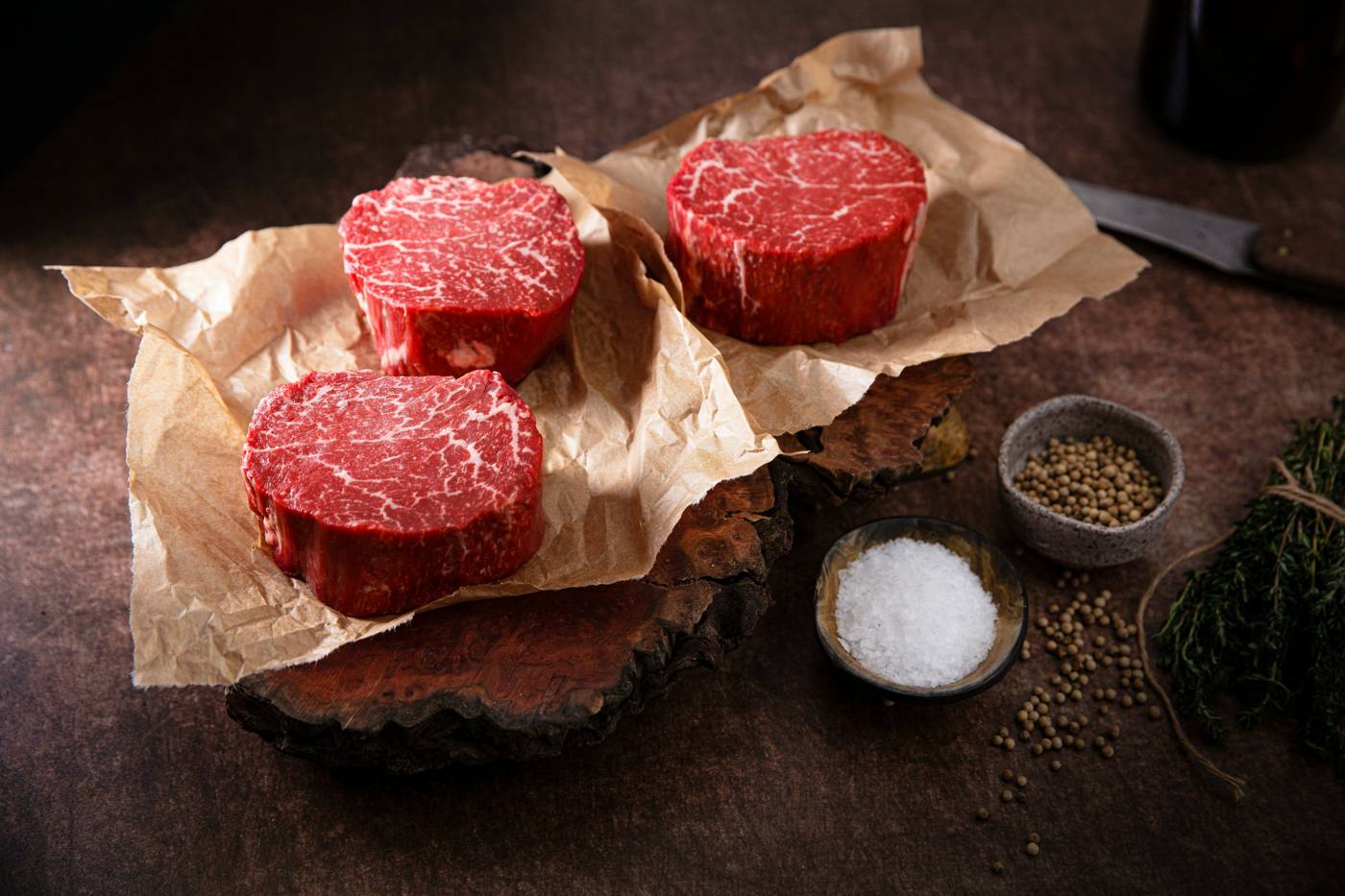
Hot pan. Good salt. Don't overthink it.
Wagyu carries its own fat, so it needs little help. Bring the steak to room temperature, pat it dry, and salt it well. A screaming-hot pan, a short sear each side, then rest it for as long as you cooked it.
Because the fat renders fast, pull it a few degrees under where you normally would — it keeps cooking while it rests. Cooking to temperature, the centre reads about 52 °C for rare, 55 °C for medium-rare and 60 °C for medium; take it off two or three degrees below and let it climb.
Mince, sausages and anything rolled or diced go right through to 71 °C, the same as any beef — the rare-in-the-middle rule is for whole cuts only. Thaw in the fridge rather than on the bench, and keep raw and cooked on separate boards.
How your beef reaches you.
Raised slow
Three years outside on the home hills — the time it takes for marbling to lay down evenly.
Processed locally
Home kill through Wild Game Hawkes Bay, our local butchers, arranged within Out the Farm Gate.
Cut to order
You set the cut sheet — steak thickness, roast sizes, how much mince — and the butcher cuts to it.
Reserved & collected
You reserve your share through Out the Farm Gate and arrange pick-up or delivery there — packed ready for the freezer.